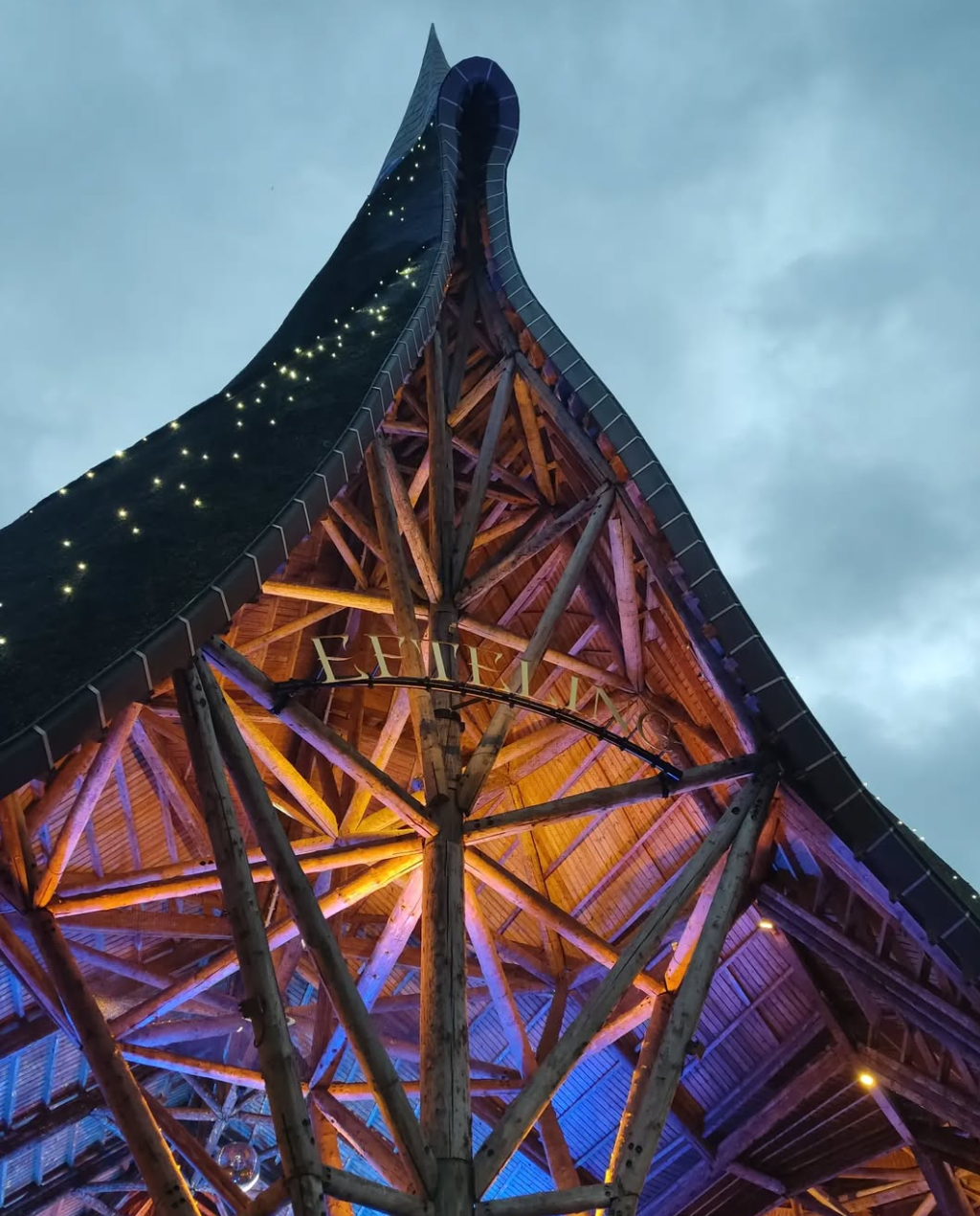
It has escaped no one’s notice: between 2008 and 2019, the Efteling experienced a significant surge in visitor numbers. During these years, the park dared to invest heavily; Bosrijk opened after an investment of 45 million euros, and the park transitioned to a year-round operation as of April 1, 2010. Replacing the Pegasus certainly helped to attract a slightly older audience, while opening the park year-round led to an influx of families with young children from all corners of the country, and even from abroad.
Although the decision to remove the Pegasus was painful for many fans—as the old coaster was the very first ride experience for so many—it was a necessary step for the park’s development. That same year, the Sprookjesboom (Fairytale Tree) came to life in the Fairytale Forest, supported by a TV series that remains on air to this day, symbolizing the success of Efteling’s media ventures. The Efteling has always been synonymous with timeless enchantment, but as we move through 2026, a difficult question arises: is the magic starting to fade under the weight of its own success?
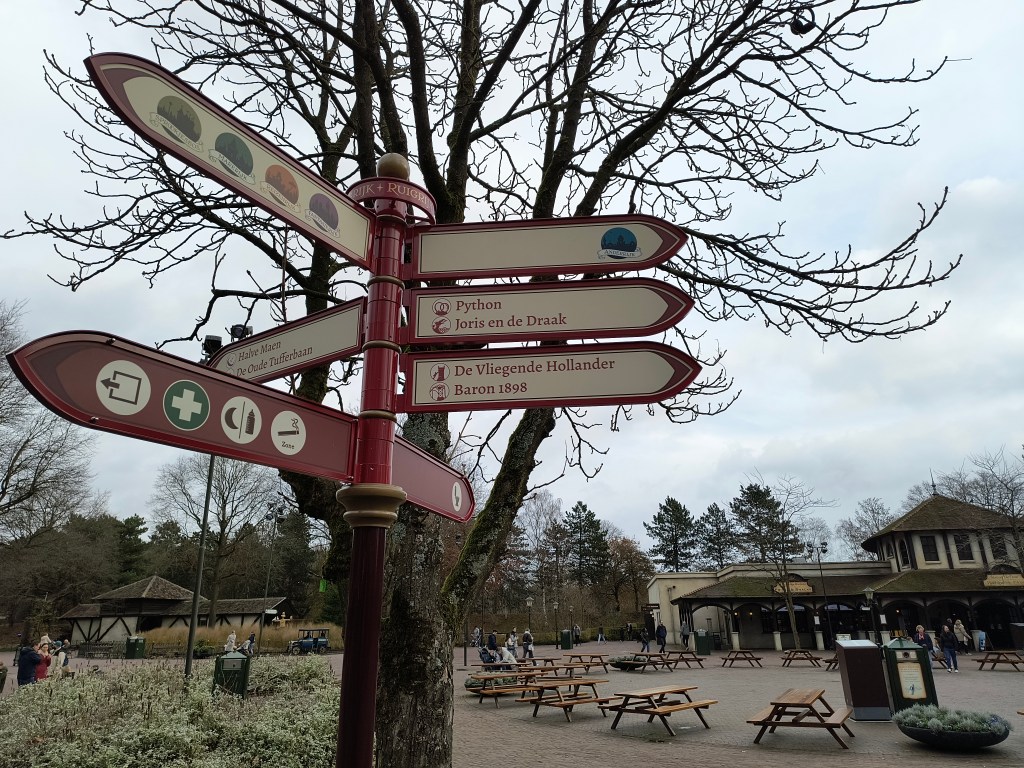
Strategic Growth: from seasonal attraction to year-round resort:
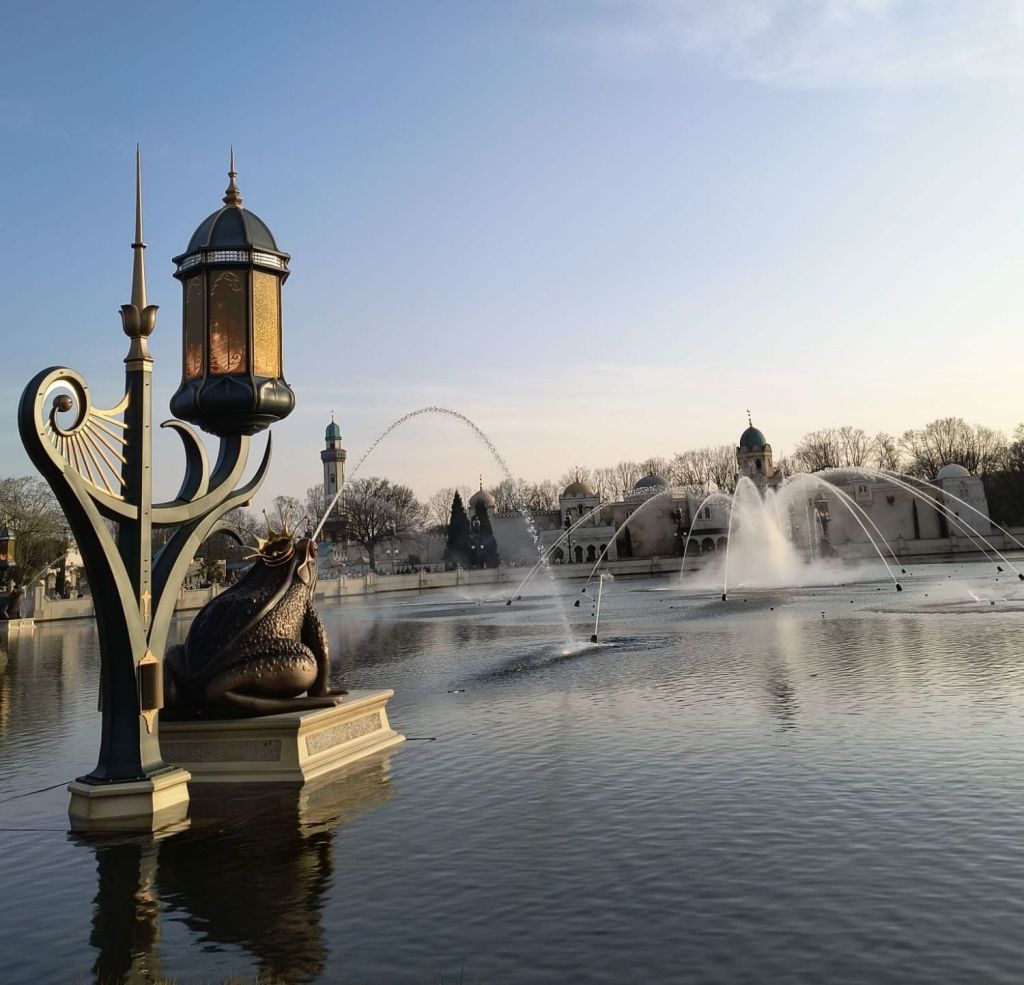
In 2011, the magical city of Raveleijn opened, based on the book by Paul van Loon. Although the park show is now a thing of the past in 2026 and the arena is being converted into a themed area—a point I will return to later—it marked a major leap in entertainment at the time. That same year, the entrance area was revamped to pave the way for the 2012 transformation of the Vonderplas: Aquanura. This fountain show was the big novelty for the park’s 60th anniversary and remains the perfect conclusion to a day at the Efteling.
The following years were relatively quiet, featuring only major maintenance on the Piraña, until ‘Rijksmijn Baron 1898’ opened in 2015. With this B&M dive coaster, the park gained only its second inverting coaster—striking for a park that had already existed for 63 years. Following the launch of Baron 1898, the Efteling showed no signs of slowing down its expansion efforts: early 2016 saw the start of construction for Symbolica (a project that had been on the shelf since 2010 under the working name Hartenhof), and later that year, construction began on Loonsche Land. Both projects opened during the 65th anniversary in 2017, officially transforming the Efteling into a full-fledged resort.
While the Efteling treated visitors to Symbolica and Loonsche Land, the public gave the park a magnificent gift in return: the magical five-million-visitor milestone was broken. Growing from 3.2 million visitors in 2008 to 5 million in 2017—an increase of 1.8 million in less than a decade—is an achievement many international parks would envy.
Yet, this rapid growth also revealed a shadow side. Current permits stipulate that the park may not receive more than 5 million visitors per year. Has the Efteling become a victim of its own success? ‘Standing still is moving backward,’ especially in the fast-growing theme park sector, and this forced stagnation seems to be the foundation of a simmering identity crisis. Now that the limits of numerical growth have been reached, the Efteling faces its greatest challenge yet: can it manage to remain not just the largest, but the most enchanting destination in Europe?
High quality, small scale: the struggle for indoor capacity:
While the attraction offering has not grown as fast as the visitor numbers, the food and beverage options fortunately have. As the Ruigrijk area became increasingly popular, expanding there was a logical step. Station Ruigrijk made way for Station de Oost, a themed dining hall where you can grab a quick bite like fries or kebab, but also find shelter and warmth on cold or rainy days. Furthermore, linking it to the steam train was a smart financial move; while waiting for the train to enter the station, visitors are often tempted to grab a quick drink or snack. It is a win-win for both the park and the visitor.
In 2011, Polles Keuken followed—a pancake restaurant with a captivating atmosphere, yet an indoor seating capacity that remains far too limited for the massive crowds the park now attracts. This becomes painfully clear in winter, when the terrace is closed and everyone tries to crowd inside. A few minutes’ walk away, we find Het Witte Paard, where the story is much the same: indoor capacity is simply insufficient on busy days.
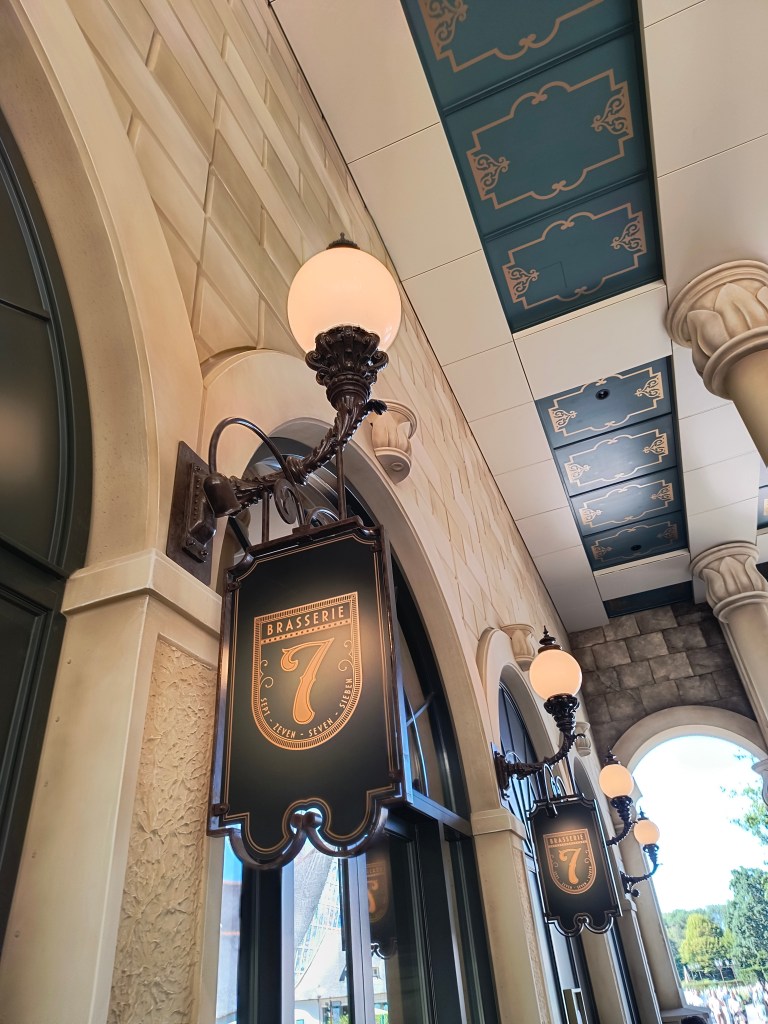
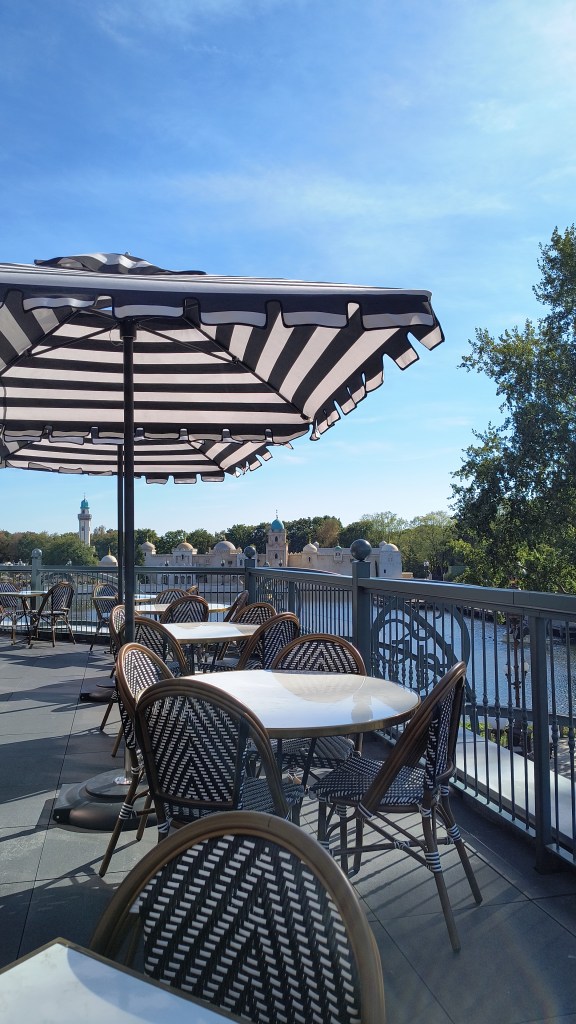
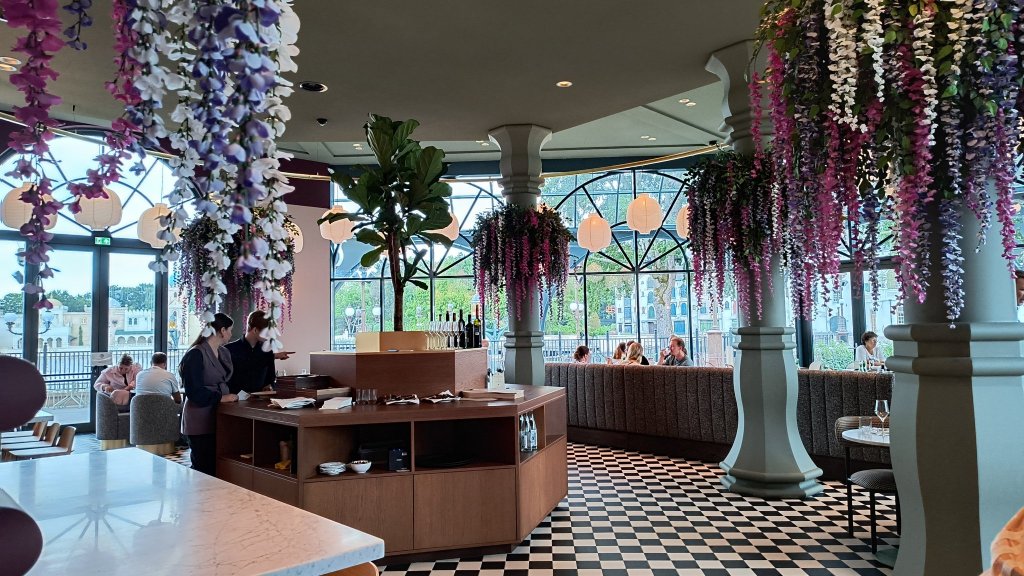
Even with the opening of Bäckerei Krümel in 2021, an opportunity was missed. Although the food quality is excellent, the Efteling could have created a much larger indoor space given the attendance figures. One must wonder why they didn’t. Only in 2025, with the opening of the Efteling Grand Hotel and the restaurants Brasserie 7 and Mystique, has the park finally shown it can deliver a large-scale restaurant with a diverse menu. Now that they have proven it is possible, the big question is whether we can expect this standard in the rest of the park. Given that crowds are only expected to increase, this is essential; you can no longer rely solely on extra take-away locations.
Fortunately, in recent years, the Efteling has become more proactive in redeveloping areas where dining is integrated from the very beginning. A prime example is the reopening of Raveleijn in the autumn of 2026; the park has already indicated it will open an additional dining location there that operates all day, unlike the Wapen van Raveleijn, which previously often only served guests during evening hours.
Still, the question remains whether this will be enough, or if the park simply requires another massive, high-capacity restaurant. The Efteling stands at a difficult crossroads due to the strict 11% building limit in the zoning plan. Every choice to add extra catering comes at the expense of space for a new experience or attraction. While dining is crucial for revenue, attractions are what ultimately shorten wait times and boost guest satisfaction. An extra complicating factor is the ‘back-of-the-house’ infrastructure—kitchens, staff quarters, and storage. These invisible but necessary square meters swallow a significant portion of the permitted building percentage, meaning that space is permanently lost for future attraction expansions.
Mass over Magic: A Fairytale or a Logistic Nightmare?
The Efteling had dreamed of success, but they likely couldn’t have predicted that visitor numbers would rise so sharply in such a short window. The big question, however, remains: where do you put all these people? With the addition of Bosrijk, Loonsche Land, the Efteling Grand Hotel, and the renovated Efteling Wonder Hotel, there are now more than enough beds to encourage multi-day stays, but the park’s ‘engine’ seems to be faltering.
The beds are there, but the infrastructure, dining, and attractions have not grown proportionally. While visitor numbers exploded between 2010 and 2024, we saw a striking pattern in the attraction and show lineup: replacement instead of expansion. Projects like Joris en de Draak (2010), Max & Moritz (2020), Sirocco (2022), and Danse Macabre (2024) were each built on the sites of existing icons. Net-wise, hardly any extra ride capacity was added to the park’s total, while Polka Marina even disappeared permanently without a replacement…and although the NEST! opened in 2021, it remains a playground; it lacks the hourly throughput of a major attraction needed to ease the pressure on the park’s busiest days.
The Efteling often favors complex experiences with long ride durations, yet the park is currently screaming for “flat rides”—attractions with short cycles that can process massive amounts of people per hour. In 2026, the Efteling seems to have finally seen the light with the opening of Hooghmoed and the reimagining of the Raveleijn area, but whether this will suffice remains to be seen. Here again, we encounter the 11% building limit and a secondary challenge: where do you actually place an extra flat ride? The goal is to maintain the “nature park” aesthetic, yet attractions—and their substantial queues—require significant space. It is also vital not to lose sight of the existing lineup. As the Efteling approaches its 75th anniversary in 2027, a large portion of its attractions date back to the pre-2000 era. These aging icons will require increasingly intensive maintenance; after all, no ride lives forever. It makes one wonder: which attraction will be the next to face the wrecking ball?
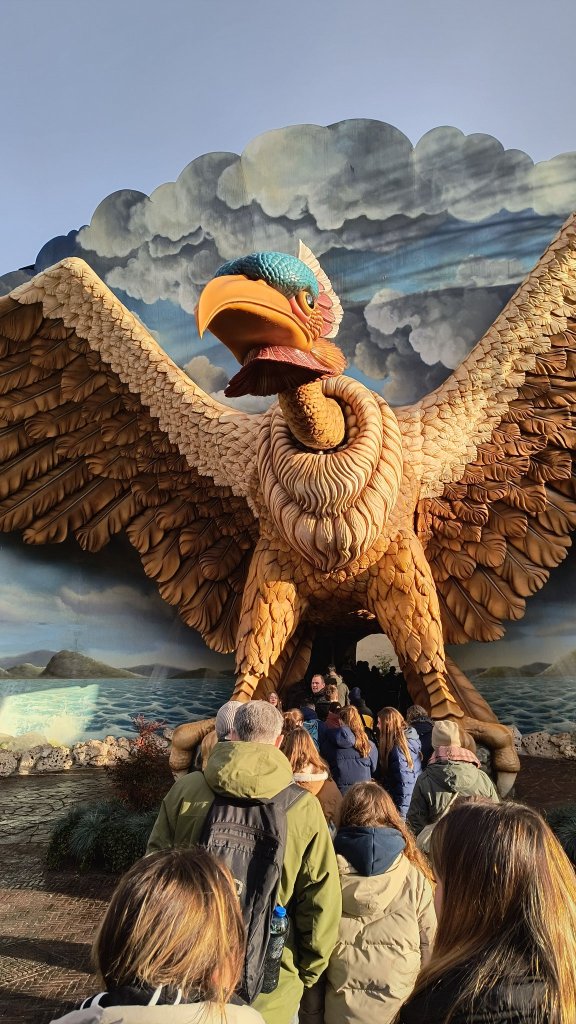
A prime example of this operational dilemma can be found in Fata Morgana and Vogel Rok. The Efteling has made no secret of the fact that Fata Morgana (1986) is scheduled for major refurbishment, but this brings a crucial dilemma. Even on the busiest days, the attraction often maintains a short wait time thanks to its massive capacity of 1,800 guests per hour. This is exactly what the fast-growing Efteling needs: a ‘capacity eater’ for all ages that is also fully accessible for disabled guests. Similarly, Vogel Rok (1998) serves as a vital engine for the park’s flow. Despite its age, it remains one of the most efficient rides in the park, processing up to 1,600 guests per hour. Together, these two attractions do the “heavy lifting” on peak days. It raises a difficult question for the coming years: can the Efteling truly afford to take these vital engines offline for long-term maintenance while visitor numbers continue to climb?
To stay with Fata Morgana: the big question is whether the park can afford to lose Fata Morgana for a year or more during such a renovation while visitor numbers continue to climb. Additionally, an inevitable question hangs in the air: does an attraction from 1986 still fit the 2026 lineup, or must it eventually make way for something new and exciting? Although it remains one of my personal favorites, the complex occupies a significant portion of the permitted 11% building space. As long as development on Strookrijk remains stalled, this footprint is incredibly precious to the Efteling, making the future of this “Forbidden City” more uncertain than we would like.
The Efteling has always claimed to build for eternity, even if that isn’t always feasible. Fortunately, the park has demonstrated that it will do whatever it takes to future-proof its current attractions; one only needs to look at the total retrack of the Python in 2018 or the extensive renovations of Droomvlucht and Piraña. Despite the uncertain long-term future of Fata Morgana, I do not expect it to disappear from the park landscape anytime soon.
Entertainment: An experience on a part-time basis?
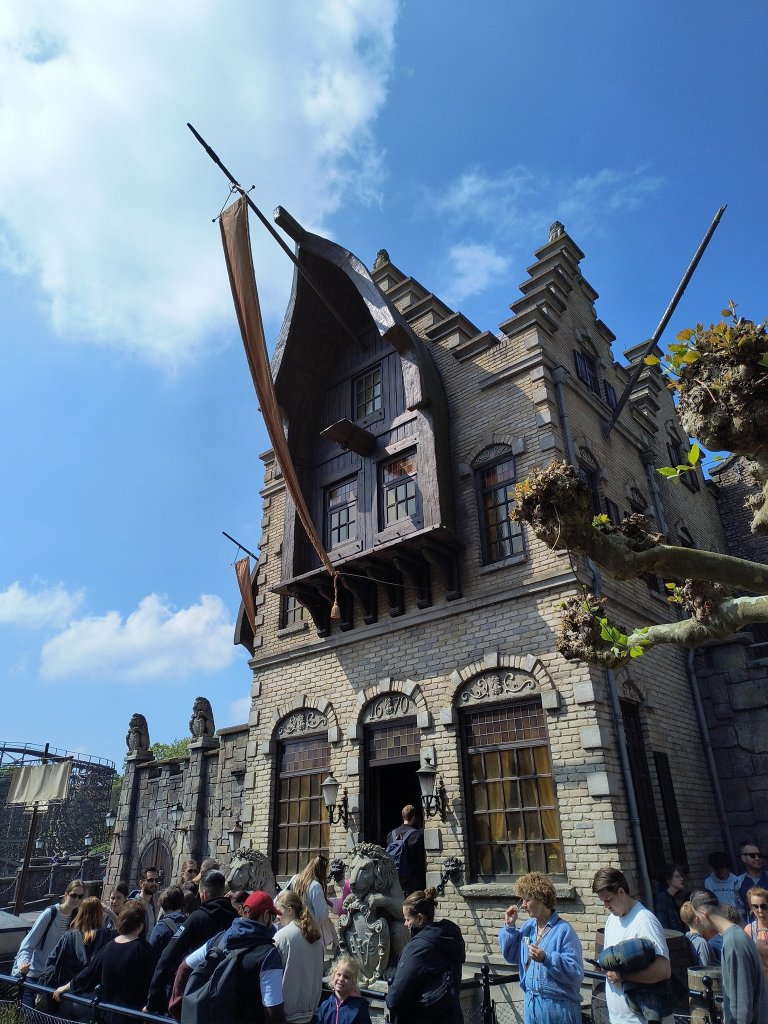
Beyond technology and rides, the Efteling attempts to enhance the guest experience with live entertainment, but frequent visitors will notice a striking disparity. During the busy summer months or the Winter Efteling, the park pulls out all the stops, featuring extra acts and live music to entertain the crowds and alleviate pressure on the attractions. However, visit on a standard weekday in spring or autumn, and that additional entertainment is nowhere to be found.
While the ticket price often remains the same—and the park can still be quite crowded due to the high number of resort guests—the extra magic that softens the blow of long wait times is missing. The Efteling strives to deliver a “9+ experience” for every guest, but currently, that score seems heavily dependent on the date printed on your ticket.
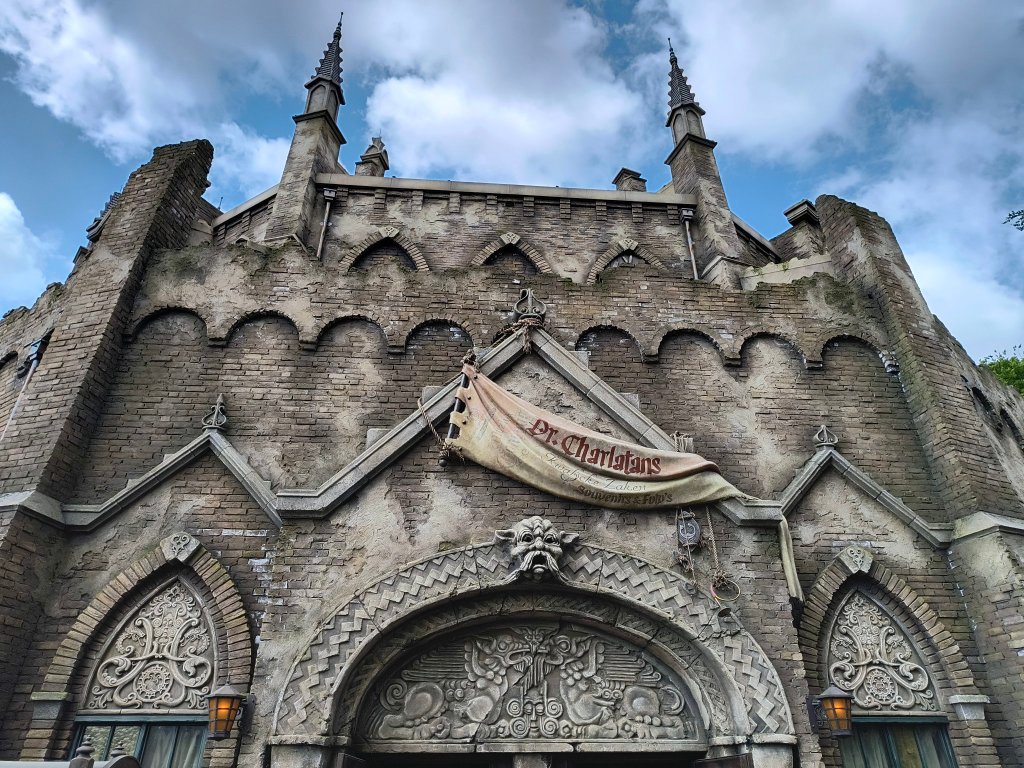
In the development of new areas, the Efteling has truly begun to adopt a holistic approach; integrating not just dining and attractions, but entertainment as well. A prime example is the Charlatan family, who played a central role in the making-of series for Danse Macabre. The family wasn’t just confined to the screen; they were present in the park, where they actively reinforced the narrative from the series, adding another layer of depth to the attraction itself. This level of cross-media storytelling is something the Efteling hadn’t prioritized in years, but it has paid off tremendously. It perfectly suits the park’s atmosphere while generating organic marketing through fans and visitors. Because, let’s be honest: who wouldn’t want a photo with a Charlatan? There will always be guests asking, “Who are they?”—only to find themselves looking up the lore behind Danse Macabre later that day.
The same logic applies to innovations like virtual queuing, which we now see implemented at Danse Macabre. While it successfully removes guests from a physical line, it immediately shifts the pressure to the walkways and terraces. If the park truly intends to disperse the crowds, they should not reserve those extra experiences and live entertainment solely for holiday periods. It is precisely on those “standard” days that the park needs extra entertainment to prevent visitors from focusing exclusively on long attraction queues or overcrowded dining locations.
The verdict: shaking off the weight of success:
Returning to the question that hangs over the park: is the magic starting to fade under the weight of its own success? To me, the Efteling is at a tipping point. I truly believe that in the coming years, the park shouldn’t be afraid to invest boldly and really dare to think outside the box. The competition isn’t sitting still; look at Toverland, which is now a serious rival by building huge, ambitious themed areas all at once. If the Efteling wants to stay at the top of the European league, change is unavoidable—not just in how the park runs, but in their whole strategic vision. Inside the gates, better dining is a must, and adding more attraction capacity isn’t a luxury anymore—it’s a necessity. A flat ride might not immediately feel like “Anton Pieck,” but it is desperately needed to keep the park running smoothly.
As a resort, there is also work to be done; once the park gates close, there should be more for overnight guests to do. While Disneyland, Europa-Park, or Phantasialand offer plenty of bars and restaurants for the evening, the Efteling still falls short with just a single restaurant and no real bar. With Danse Macabre, the Grand Hotel, and the plans for 2026, the Efteling shows they see the problems, but the real solution lies in consistency. Whether it’s enough seats in a restaurant, keeping the old icons in top shape, or entertainment on a random Tuesday: every guest deserves that “9+ experience.” Heading toward the 75th anniversary in 2027, the Efteling has to prove they can find the balance between the mass and the magic. Ultimately, the park is at its best when you don’t notice the technology or the crowds. That’s when you—no matter what day it is—can truly step into another world.
What’s your verdict? Is the Efteling still the gold standard for theme parks, or is the magic being overshadowed by its own growth? Join the conversation in the comments!


 What does Bart say? - A Theme Park blog!
Leave a comment